
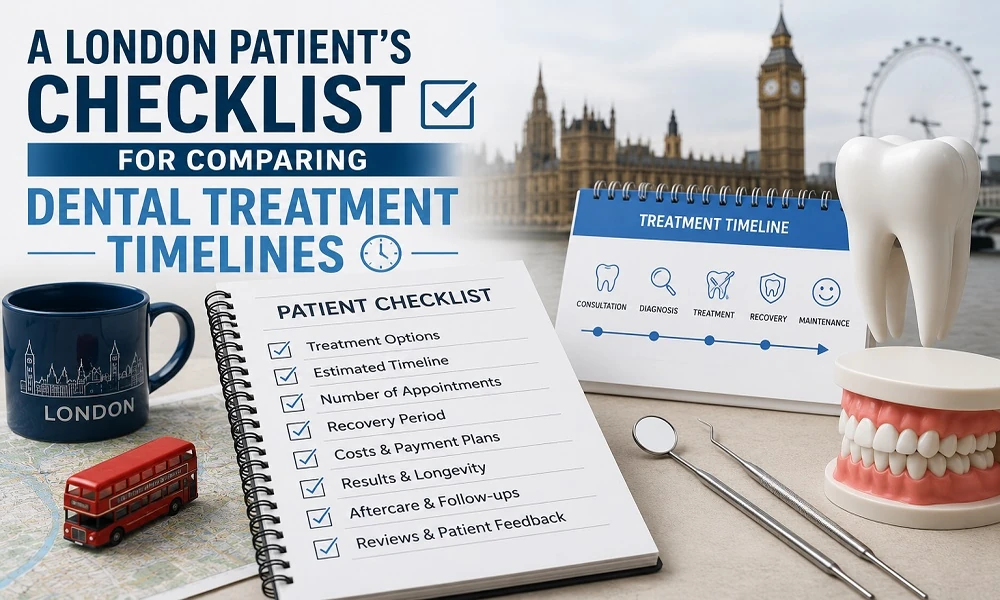
Dental timelines can be difficult to compare, especially for busy London patients. One plan may sound faster, another may sound more thorough and a third may include stages that are not immediately obvious. The right comparison is not only how long treatment takes, but why it takes that long.
A useful timeline explains assessment, preparation, treatment, review and maintenance. It also makes room for the patient’s diary without allowing convenience to replace suitability. That is where a checklist approach helps.
Dr. Sahil Patel of MaryleboneSmileClinic explains that patients should compare timelines by clinical purpose, not speed alone. He says each stage should have a clear reason, whether it involves gum care, shade settling, scans, laboratory work, healing, review or maintenance planning. His advice is to ask what information each appointment provides and what decision it supports. That helps patients understand whether a shorter timeline is genuinely efficient or simply missing steps.
This kind of comparison is especially useful when treatment affects appearance. The patient needs enough time to understand the plan, not just enough time to attend appointments.
Check What the First Appointment Must Answer
The first appointment should reduce uncertainty. A useful way to approach this is to ask what evidence the mouth is already giving. The dentist is identifying the concern, examining oral health and deciding which records are needed, then comparing that information with the patient’s goals so the plan has a clinical reason as well as an aesthetic one.
The assessment is not just a formality. a timeline that starts without clear assessment may hide important unknowns. If the explanation skips this point, the patient may agree to a treatment name without understanding what the treatment is expected to solve.
bringing questions, photographs and information about symptoms or previous dental work gives the appointment a more honest picture of daily life. It is often the difference between a plan that looks neat on paper and one that the patient understands, follows and returns to for review.
That is why the next step should be framed as a first-visit summary that explains the next decision. It should be specific enough to guide action while leaving room for findings that only become clear after examination or early care.
The safest boundary is appointments should not be counted as progress if they do not answer useful questions. Patients deserve that clarity before any visible change is treated as the obvious answer.
This also gives the dentist a chance to check that the patient has heard the reasoning, not only the recommendation. When the finding is connected to timing, comfort and upkeep, the decision feels less like a sales choice and more like a shared clinical plan.
A calm plan also leaves room for questions. Patients often think of practical concerns after they have left the chair, and the advice should be robust enough to welcome those questions rather than treat them as hesitation.
Compare Preparation Time, Not Just Treatment Time
Preparation often explains the difference between timelines. The strongest answer is rarely the one that sounds most dramatic. It begins with checking whether hygiene care, repairs, whitening, scans or planning visits are included, because the aim is to decide what genuinely needs to change and what should be protected.
Clinically, a plan that looks longer may include steps that protect the final result. That detail may alter the order of care, the material chosen, the review interval or the decision to pause before moving further.
The conversation should invite asking which preparation stages are essential and which are flexible. People often describe concerns in ordinary language, and those descriptions help the dentist connect technical findings with what actually bothers the patient.
Once the finding is clear, the practical step is a breakdown of preparation, active treatment and review. Good advice should explain that step without making the patient feel rushed into a larger plan.
The limit to keep in view is a shorter quote of time should not be accepted until missing preparation is understood. Holding that limit in the conversation protects comfort, health and confidence at the same time.
The same idea should return at review appointments. If the mouth changes, the patient should know whether the change affects appearance, comfort, cleaning or the life of any material placed. That makes follow-up feel purposeful instead of merely routine.
In the end, the point is not to make cosmetic dentistry sound complicated. It is to make the decision transparent, so the patient understands why the chosen step is enough, why another step is being delayed or why a larger plan is justified.
Ask Where Review Fits
Review is part of treatment, not a spare extra. For a London patient, this question often sits beside diary pressure, photographs, social plans and daily routines. The clinical conversation still starts with checking when the dentist reviews comfort, bite, shade, tissue response or fit, because convenience only helps when the dental foundation is understood.
The reason is that some decisions are stronger after the mouth has settled or the patient has tested a stage. Appearance depends on small biological and mechanical details, and those details need time to be checked before treatment is fixed.
A patient helps by explaining availability for follow-up around work, travel and family commitments. That makes the consultation less abstract and gives the dentist a clearer sense of how the plan will be lived with after the visible work is done.
The next step may be a timeline with review points before final decisions are locked in. The important point is that the patient understands the purpose of the step, not just the appointment label.
The boundary is the plan should not finish before the result has been checked in use. When that boundary is respected, practical care feels efficient without becoming careless.
A useful section of advice always ends with a concrete patient understanding. The patient should know why this detail matters, what it changes, what remains uncertain and which questions deserve another conversation before treatment goes further.
For the patient, the practical test is simple: the explanation should still make sense after the appointment. If the reason for a recommendation cannot be repeated in everyday language, it usually needs to be explained again before the plan moves forward.
Understand Laboratory and Healing Stages
Some timelines are shaped by work that happens between appointments. In practical terms, the appointment starts by reviewing whether laboratory design, healing, aligner movement or shade stabilisation is involved. That first check gives the discussion a specific route, so the visible concern is not pulled away from oral health, comfort or the way the patient uses their teeth.
The clinical detail matters because between-visit stages can be clinically important even when the patient is not in the chair. When this is explained in plain language, the recommendation feels connected to the mouth rather than selected from a treatment menu.
Useful patient detail comes from asking what happens during waiting periods and what the patient should do at home. These everyday details often affect timing, material choice or the amount of change that feels sensible, especially when the result has to fit work, travel and normal routines.
The next step should be concrete, such as an explanation of between-stage responsibilities. That gives the patient something practical to understand before agreement, rather than a vague sense that cosmetic care simply begins.
A clear boundary is waiting time should not be dismissed if it supports accuracy, healing or comfort. Naming that boundary supports informed consent and keeps the plan proportionate, even when the patient is eager to see improvement quickly.
Handled well, this point also protects against over-treatment. It encourages the patient and dentist to ask whether the proposed step is genuinely solving the concern or simply adding activity around it. That distinction keeps cosmetic care measured and easier to trust.
That clarity is also useful when choices overlap. Two options may both improve appearance, but they rarely ask the same things from enamel, gums, time, cost, repair and daily care. The patient should hear those differences plainly.
Match the Timeline to Real Life
A timeline only works if the patient can follow it. This part of the decision benefits from a slower conversation. Instead of treating the first visible issue as the whole problem, the dentist is checking work hours, travel, events, anxiety and ability to attend reviews, then relating the finding to appearance, function and cleanability.
The detail matters because missed follow-up or inconsistent home care can affect treatment more than the original schedule. It also helps separate what is cosmetic from what is structural, which is important when several routes seem possible at the start.
From the patient’s side, the most helpful contribution is being honest about weeks when appointments or instructions are hard to manage. That context makes the advice more realistic because the plan has to survive ordinary habits, busy weeks and follow-up visits.
A measured plan usually turns this into a practical schedule that keeps clinical priorities intact. The patient should know why that step comes now, what it changes and what remains under review.
The caution is convenience should support the plan rather than dilute it. This kind of restraint does not make care less ambitious; it makes the ambition easier to maintain after the appointment ends.
Before leaving this point, the patient should understand how match the Timeline to Real Life affects the next decision. The value is practical: it shows what needs checking, what can be left alone, what should be reviewed and what kind of maintenance follows. Without that link, the section becomes a general idea rather than advice the patient can use.
This is where careful notes, photographs or a short summary help. They give the patient a way to compare the concern, the proposed route and the follow-up advice without relying only on memory from a busy consultation.
Choose the Timeline With the Clearest Reasoning
The best timeline is the one the patient understands. A useful way to approach this is to ask what evidence the mouth is already giving. The dentist is checking whether each stage has a purpose and whether alternatives have been explained, then comparing that information with the patient’s goals so the plan has a clinical reason as well as an aesthetic one.
The assessment is not just a formality. clarity reduces pressure and helps the patient compare options fairly. If the explanation skips this point, the patient may agree to a treatment name without understanding what the treatment is expected to solve.
asking for plain-English reasoning before agreeing to the route gives the appointment a more honest picture of daily life. It is often the difference between a plan that looks neat on paper and one that the patient understands, follows and returns to for review.
That is why the next step should be framed as a final timeline that names stages, responsibilities and review points. It should be specific enough to guide action while leaving room for findings that only become clear after examination or early care.
The safest boundary is patients should not choose speed when they do not understand what speed removes. Patients deserve that clarity before any visible change is treated as the obvious answer.
This also gives the dentist a chance to check that the patient has heard the reasoning, not only the recommendation. When the finding is connected to timing, comfort and upkeep, the decision feels less like a sales choice and more like a shared clinical plan.
A calm plan also leaves room for questions. Patients often think of practical concerns after they have left the chair, and the advice should be robust enough to welcome those questions rather than treat them as hesitation.